
The Psychology Behind Powerful Associations in Perfumery
In our previous post about fragrance copy, we talked about the impossible task of finding an association so powerful it practically does the work for you. Here are three techniques (by no means a complete list) that are surprisingly effective: we’ll describe how to use them and the psychology behind why they work.
Leverage non-typical occasions.
Highlight how high-end perfume can elevate the mundane and make routine moments magical. Perfume as a tool to romanticize the everyday. Going to bed in ultra-premium oud blends that induce strange, kaleidoscopic dreams. Using lush vintage perfume with jeans and flip-flops to throw out garbage or visit the next-door bodega. Spraying $500 perfume before taking a shower to make the process more enjoyable.
This particular angle is more suited for reviews and can be difficult to translate into copy, but you get the idea. Instead of using it in text, you might leverage video ads or have the brand founder share these scenarios as personal stories in interviews.
Or, if you want to forge a philosophy of rarity, you may anchor your scent to fleeting moments and specific environments that create the perfect conditions to experience it. Show how scent behaves when it collides with certain temperatures, humidity, background air… in places where a fragrance isn’t meant to be. How the melon note in your perfume turns damp, moldy stairwells into something perversely pleasant. How floating on an inflatable duck in the warm ocean is the best way to experience your fragrance: that’s where ambroxan, often dismissed as “chemical”, finally contrasts its reference point and shines as the beautiful part of the real thing. How a below-freezing temperature is the only way to smell a specific oomph from your fragrance, requiring a wait for those 1-2 days per year to experience it, just as winemakers wait for the first really cold days to collect ice wine grapes. How the warm rain lifts the top berry notes, just like the morning steam in one’s bathroom, giving you a natural way to control the strength of accords.
Why it works:
Instead of selling worn-out romance or mood, you are describing experiments that people will want to recreate.
Bring up little-known olfactory facts, myths and observations about ordinary things.
Have you ever noticed that a bag of rice, if you put your nose into it… smells surprisingly like semen? Probably not until Bertrand Duchaufour famously pointed it out when discussing his fragrance Semence Douce.
Or did you know that the pleasant, nostalgic smell of freshly cut grass is actually plants emitting specific compounds as a defense and communication mechanism – a fact the main character in Les Parfums (Perfumes, 2019) dramatically referred to as “the smell of carnage”?
It could be anything – facts from chemistry, nature, psychology, biology, the science of sleep, the science of cooking. How skatole may potentiate aggression or how javanol cannot be smelled in high concentrations. How zinc makes one’s smell more acute, besides just raising libido. How insects organize their empires or how snakes smell with their tongues and what this means for the future of perfumery.
You can build an entire line around these if you uncover a cluster or lesser known curious facts unified by a clear theme. But…
Test them on your audience first to make sure they are not only interesting to you.
The key to making it right is to avoid random “this fragrance was inspired by” references and instead use facts with an intrinsic olfactory connection.
We stumble upon such facts every day. The challenge is to weave them into a concept elegantly.
If you struggle to find them though, ask your perfumer. They usually know a wealth of quirky facts, especially those who work across domains and regularly tackle non-trivial tasks like masking odors or adapting scent for specific mediums.
Why it works:
For two reasons: it sparks sensory curiosity, and it gives people a conversation opener.
Compare the 2 scenarios:
“If I buy this perfume, it will make me smell irresistible on my next date”
“If I buy this perfume, it will make me smell irresistible on my next date – and when my date asks what I’m wearing, I can casually drop that they are actually smelling the collective pheromonal panic of a lawn being executed by a Honda HRN216, which will make me interesting.”
Explore smell-texture interplay.
Textures are the new black in the world of design, and the fragrance world, tired of recycling the same category names and epithets, follows suit. We are seeing more and more textural descriptions that originate in flavor, winemaking, and even unrelated disciplines. Osmo has even introduced a new scent taxonomy that includes “sensations & textures”. Reels and ads from beauty and fragrance brands are shifting from flat aesthetics to textural, tactile hooks designed to feel immersive.
Porous, tendrilled, membranous, pulsating, spongy, sandy, frothy, astringent… These are powerful words that make descriptions more vivid. But associations strong enough to sit at the center of a concept require more elaborate textural metaphors. Frozen smoke, slimed fur, contained bloom – play with combinations of descriptors until you find something usable.
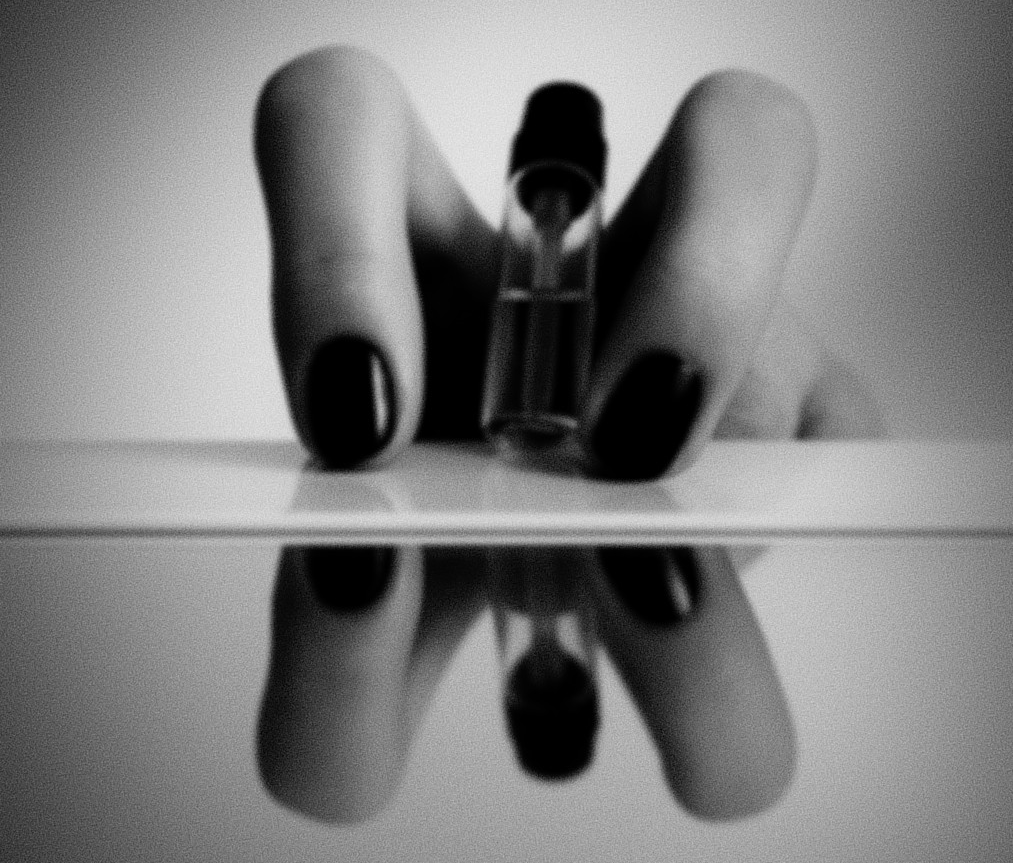
Or you could play with properties of aromachemicals. Have you seen how undiluted javanol trickles down the side of an ampoule? It’s sexy.
Why it works:
It speaks to a growing desire for sensory depth and immersive escapism. Some people are naturally drawn to this – they feel alive and happy when they touch, smell, or hear, rather than when they intellectually process reality. Others turn to it as a way to balance growing daily overstimulation by releasing control and letting sensations take over. They dream of flying, floating, or free-falling; they dream in colors and temperatures. Textural metaphors help describe these otherwise ineffable states in an evocative way.
Now, linking scent to textures can be approached in two ways: by presenting smell as texture – which we just discussed – or by focusing on how objects with a particular texture smell. The second tactic is related, but there’s a nuance that makes it fundamentally different.
Did you know there’s a micro-segment of people obsessed with the smell of rubber doll heads? Well, that association is already owned. But maybe you could leverage the “smell of a dolphin’s rubber skin”? The smell itself doesn’t need to have a texture, it just needs to be associated with an interesting one.
Why it works: because it’s nostalgic. We play with sensory objects constantly in childhood… but largely stop as adults. When you make people think about textural objects, it activates memories from a time when emotions and impressions were unusually intense.
